
Do communication styles influence how we use emojis?
A reflection on culture, communication styles, and how we interpret meaning in digital communication
GENERAL COMMUNICATION
6/1/2026
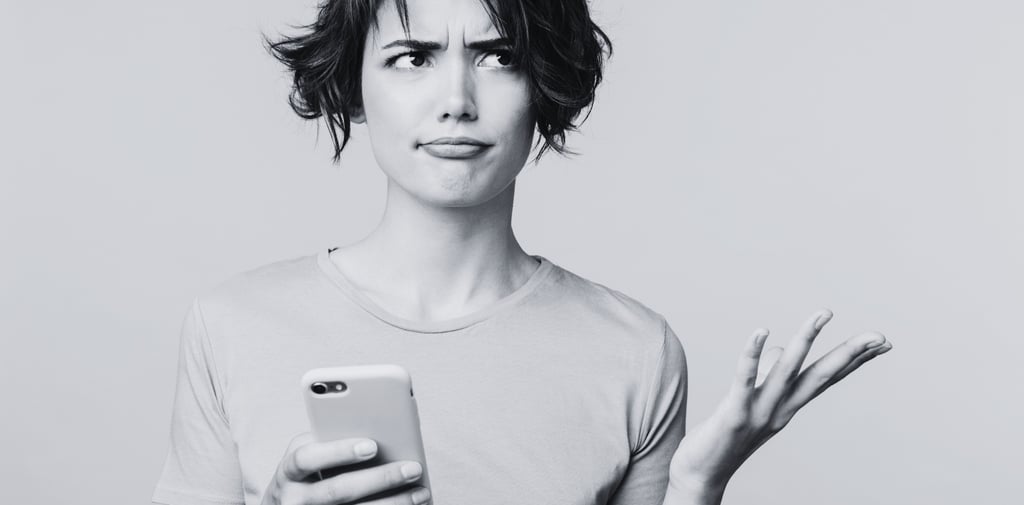
This morning, while getting ready for work, a random thought popped into my head. And I’d like to pre-empt this by saying that this is not a post on professional communication, but rather a general reflection on how we interpret meaning in everyday digital interaction.
So, today’s thought was about emojis🤓
If I had to name the top three emojis used by one of my closest friends, I could do it immediately: 😅✨🥹
Then I wondered what my own top three would be… Again, easy: 🤣😅😆
That led me to think about other people I know, and I became curious about why some people use emojis frequently, while others hardly use them at all. That’s not exactly a groundbreaking observation. Most of us have probably noticed it. But today, for some reason, I found myself going down the rabbit hole of asking why.
More than cute decoration?
When we communicate through text, a significant amount of information disappears. There are no facial expressions, no tone of voice, no body language, and often very limited contextual framing.
After all, much of human communication is not strictly verbal.
This raises an interesting question: what role are emojis actually playing in how we construct meaning in digital communication? Are we using them, consciously or subconsciously, as a kind of substitute to reintroduce emotional or tonal context into written communication?
A pattern, or just coincidence?
Based on personal observation of people I know, I’ve noticed something that I’m not sure is a real pattern or simply a coincidence:
People who tend to communicate more directly and explicitly often seem to use fewer emojis. They consider their message complete in the words themselves. (As an example, I once asked a friend what he meant by his message, and he said, “Exactly that!”)
On the other hand, others appear to use emojis more frequently, not necessarily to soften meaning, but to shape how the message is likely to be interpreted. The emoji becomes a small signal that reduces ambiguity and helps manage interpretation.
So I wonder: is there a relationship between emoji usage and communication style, culture, or personality type?
I don’t know if this is a significant pattern or just selective observation, but it’s a fascinating question.
Low-context vs high-context communication
This led me back to Edward T. Hall’s concept of low-context and high-context communication, which I touched upon in an earlier post on how cultural context shapes the way people interpret silence.
In lower-context communication styles, meaning is expected to be carried primarily in the message itself. The responsibility sits largely with the sender to be clear and explicit. The assumption is that what is written should be interpreted literally and directly.
In higher-context communication styles, meaning is distributed more across tone, relationship, shared understanding, and situational context. Interpretation depends not only on what is said, but also on what is implied or understood between the lines.
(Side note: I wonder whether there has ever been any research into whether emoji usage differs across cultures. I don’t know the answer, but if anyone reading this does, please feel free to share 🙏)
This creates an interesting tension in digital communication. Text flattens many of the cues that normally help us interpret meaning, which means different communication styles are forced into the same format, often without the same interpretive signals.
That is also why, depending on the complexity or sensitivity of a conversation, people often choose an in-person discussion, a video call, or a meeting rather than an email or text message.
When “OK” is not just OK
Let’s take something as seemingly innocuous as “OK”.
One would typically assume that “OK” carries a neutral or even positive meaning: agreement, acknowledgement, or concurrence.
But in practice, it can be interpreted in very different ways depending on context. We recognise the underlying meaning in verbal communication through tone of voice, facial expression, and emphasis. In digital communication, emojis can act as a way of mimicking those same cues:
“OK 😉”
“OK 😅”
“OK 🤨”
“OK 🧐”
“OK 😞”
“OK 😤”
“OK 😢”
The word stays the same, but the perceived meaning changes, sometimes quite significantly.
Writing systems and hieroglyphs
Historically, written communication has never been purely literal.
Authors and storytellers have long used tools such as italics, bold text, punctuation, parentheses, ellipses, sentence structure, and rhythm to shape tone, emotion, and emphasis beyond the literal meaning of words.
Throughout history, humans have used symbols, visual cues, and contextual markers to enrich meaning. Take ancient systems such as hieroglyphs, for example.
Perhaps emojis are simply the latest version of that: modern-day hieroglyphs?
Final thought
Even in digital environments, interpretation is rarely fixed. It depends on context, expectation, and the cultural lens of the person receiving the message.
And perhaps that is the more interesting question: whether there is a deeper correlation between emoji usage and the person using them, and whether emojis introduce a mechanism that helps reduce misinterpretation regardless of culture, context, or communication style
— — —
If you found this thought-provoking or interesting, subscribe below to follow along for more 😉
Connect
natascha@confidentverbalist.com
© 2026 Confident Verbalist, a brand owned by Human Defined LLC. All rights reserved.
By subscribing, you agree to receive emails from Confident Verbalist. You can unsubscribe at any time. See our Privacy Policy for details.